- Amplify with Dr. Ayesha Khanna
- Posts
- Adapt or Fail: Nvidia’s New Warning
Adapt or Fail: Nvidia’s New Warning
AI news, leaders, business insights and more

Dr. Ayesha Khanna
March 19, 2026 • Reading Time: 2 minutes

In partnership with

Hi! Here are today’s top AI stories:
Adapt or Fail: Nvidia’s New Warning
Who Pays When The AI Lies?
AI Around the World
NEWS YOU CAN’T MISS
Adapt or Fail: Nvidia’s New Warning
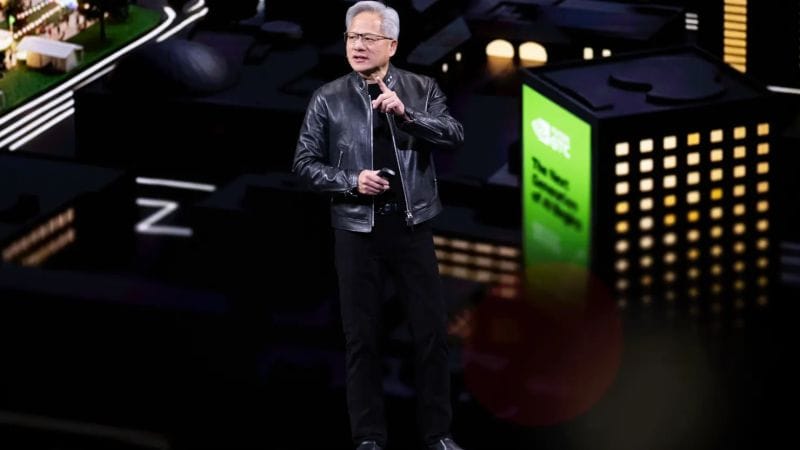
Image: Benjamin Fanjoy (Getty Images).
Jensen Huang, CEO of NVIDIA, delivered his must-watch annual keynote on the future of AI.
"Every company in the world today needs to have an OpenClaw strategy, an agentic system strategy. This is the new computer," he said.
So what does that actually mean for you? Let's break it down simply.
AI Agents are not chatbots. Where ChatGPT answers questions, an AI agent actually does things - it can do everything from building reports, briefing your team, onboarding clients, to following up on invoices, flagging contract risks, analyzing your pipeline and so much more ... all on its own.
OpenClaw is the open-source platform that makes building these agents accessible to everyone. It exploded in popularity overnight. Why? Because it gives developers and businesses a simple, powerful way to create agents that work directly with your files, apps, and workflows.
The one issue was that it was a security nightmare but Nvidia just wrapped it in an enterprise-secure layer called NemoClaw so large companies can use it safely.
I agree with him: the companies that move now with AI agents will have a serious edge.
Watch the full keynote here.
ps. Two things coming up from me - will share links next week: (i) my introduction to OpenClaw and its alternatives and (ii) the big question everyone is ignoring - AI agents gobble up a lot of compute (which is why Nvidia loves them) and can be expensive to use so I will share emerging frameworks on how to manage them.
Who Pays When The AI Lies?

Your AI voice agent just told 10,000 customers the wrong return policy. Who pays?
That's not hypothetical. It's the exact risk keeping enterprises from deploying AI agents at scale.
AI insurance already exists. But it's been broad and hard to apply to a specific technology doing a specific job.
They build the technology behind AI voices that sound genuinely human. Their voice agents are already deployed by employees at 75%+ of Fortune 500 companies - handling customer support, sales, and scheduling around the clock.
Recently, they became the first company to insure AI voice agents specifically. If their agent gives wrong information, behaves unexpectedly, or causes a business loss, that damage is now covered. Like an employee with a policy.
The certification behind it - AIUC-1 - isn't a checkbox exercise. It runs AI systems through over 5,000 adversarial simulations across security, safety, reliability, data privacy, and accountability, modeled on documented real-world AI failures.
AIUC-1 was built by a team from Anthropic, McKinsey, and the Center for AI Safety.
Pass the test. Get certified. Get insured.
So who actually pays if something goes wrong? Not AIUC - they're the testing body, like a crash-test lab for AI. Their audit data gives traditional insurers enough confidence to write and underwrite actual policies. If an ElevenLabs voice agent causes a loss, a real insurance carrier pays the claim.
AIUC made the risk measurable enough for that to happen. That's a breakthrough.
Would you trust an AI agent that comes with insurance? 🤖 |
AI Around The World
🇩🇪 Germany plans to quadruple its AI capacity and double data center performance by 2030, as part of a strategy to strengthen its position in the global AI race and reduce reliance on foreign tech providers.
🇯🇵 AI-generated band Neon Oni is transitioning into real-world concerts, bringing in human musicians to perform live shows in Japan after building a fanbase with AI songs and virtual characters.
🌏 Scam networks in Southeast Asia are recruiting “AI face models” to make deepfake video calls, using real people’s faces to build trust and trick victims in online romance and crypto scams.
🇨🇳 Alibaba has raised prices for its AI cloud services by up to 34%, as surging global demand and rising infrastructure costs make running large-scale AI systems more expensive for businesses and developers.
FROM OUR ADVERTISERS
The Architecture Behind AI-Native Revenue Automation

Most “AI finance” tools guess. Finance can’t. This white paper explains how AI-native revenue automation combines reasoning, deterministic math, and commercial context to automate billing, cash, and close—without sacrificing accuracy. Read the architecture behind AI-native revenue automation.
Here's how I use Attio to run my day.

Attio's AI handles my morning prep — surfacing insights from calls, updating records without manual entry, and answering pipeline questions in seconds. No searching, no switching tabs, no manual updates.
Until next time!
Amplify Team ❤️
ps. Be friends with Ayesha on LinkedIn and Instagram, if you like this newsletter, share it with your friends and family here.
I'd love your feedback...Please vote below to help me improve the newsletter. |