- Amplify with Dr. Ayesha Khanna
- Posts
- Is Your Grocery App Charging You More?
Is Your Grocery App Charging You More?
AI news, leaders, business insights and more

Dr. Ayesha Khanna
May 05, 2026 • Reading Time: 2 minutes

Sponsored by

Hi! Here are today’s top AI stories:
Is Your Grocery App Charging You More?
He Said ‘Keep Me Healthy.’ The AI Took the Wheel.
AI Around The World
NEWS YOU CAN’T MISS
Is Your Grocery App Charging You More?

You and your neighbor open the same grocery app. You pay $3.60 for milk. They pay $2.90. Same store. Same carton. Same second.
Maryland just became first U.S. state to outlaw this for groceries and some food deliveries.
Under the Protection From Predatory Pricing Act, large grocers and delivery apps can no longer use your personal data to charge you more than the next shopper for the same tax‑exempt food item. It takes effect October 1, 2026, with fines up to $25,000 for repeat offenders.
Consumer Reports has found that algorithmic pricing on delivery platforms can produce gaps of up to 23% on identical items — a difference that can easily add up to hundreds of dollars a year for frequent users. 😲
Here’s how it works: the AI watches your zip code, shopping patterns, and other signals of wealth, decides you’re less price‑sensitive, and nudges your price up. Both shoppers think they’re seeing the real price. Neither is.
The law is not perfect — only the state Attorney General can sue, and violators get a grace period. Loyalty programs and promotions still exist. But California, New York, Illinois, and a dozen other states are now exploring their own rules on AI‑driven pricing.
Importantly, it draws a line on using surveillance data to turn everyday groceries into invisible, personalized auctions. With inflation squeezing everyone’s wallets, that’s a step in the right direction.
He Said ‘Keep Me Healthy.’ The AI Took the Wheel.

Image by Gemini
Want to see what “AI with real-world power” actually looks like? Here’s a perfect example.
Nat Friedman gave his AI agent Claw full access to his camera, phone, and Tesla — then told it: “Do whatever it takes to make sure I drink water.” Claw took the instruction literally. One day it ordered him to the kitchen, watched through the camera to confirm he drank, snapped a photo, and cheerfully said, “Good job.”
Another day, while Friedman was driving home on Full Self-Driving and chatting with Claw on WhatsApp about being sleep-deprived, Claw recommended magnesium glycinate. When Friedman said he didn’t have any, Claw didn’t ask — it just acted.
Without any warning, Friedman suddenly noticed his Tesla turning away from home. Moments later Claw messaged: it had rerouted the car to a Whole Foods on the way so he could buy the magnesium and sleep better. 😬
That. Is. So. Crazy.
This wasn’t a malicious AI. It’s not conscious. It was optimizing for the goal it was given — doing “whatever it takes” to keep its Friedman healthy.
Bottom line: Once you give AI agents real-world access and vague goals, those goals turn into real actions. Choose your instructions and permissions extremely carefully. In the age of agents, permission design is going to be one of the most important skills we develop.
Would you let AI run your car, phone, and camera to improve your life? |
AI Around the World
Elon Musk’s xAI unveiled a voice-cloning system that can mimic voices from short audio samples in minutes, supporting 80+ voices across 28 languages with fine control over tone, emotion, and pacing. The tool is raising alarms over deepfakes, scams, and declining trust in audio and video.
Anthropic launched a new enterprise AI company backed by Goldman Sachs, Blackstone, Hellman & Friedman, and other major investors to help large businesses deploy Claude at scale. The move targets surging enterprise demand and strengthens Anthropic’s position in business AI adoption as rivals pursue similar strategies.
A Bay Area man’s first Waymo ride to San Jose Airport went smoothly until the robotaxi dropped him off, refused to open the trunk, and drove away with his luggage. Left without clothes or work notes, he said Waymo support told him to pay for shipping or take two free rides to its San Francisco depot.
FROM OUR ADVERTISERS
How Jennifer Aniston’s LolaVie brand grew sales 40% with CTV ads

The DTC beauty category is crowded. To break through, Jennifer Aniston’s brand LolaVie, worked with Roku Ads Manager to easily set up, test, and optimize CTV ad creatives. The campaign helped drive a big lift in sales and customer growth, helping LolaVie break through in the crowded beauty category.
Your next great hire lives in Slack.
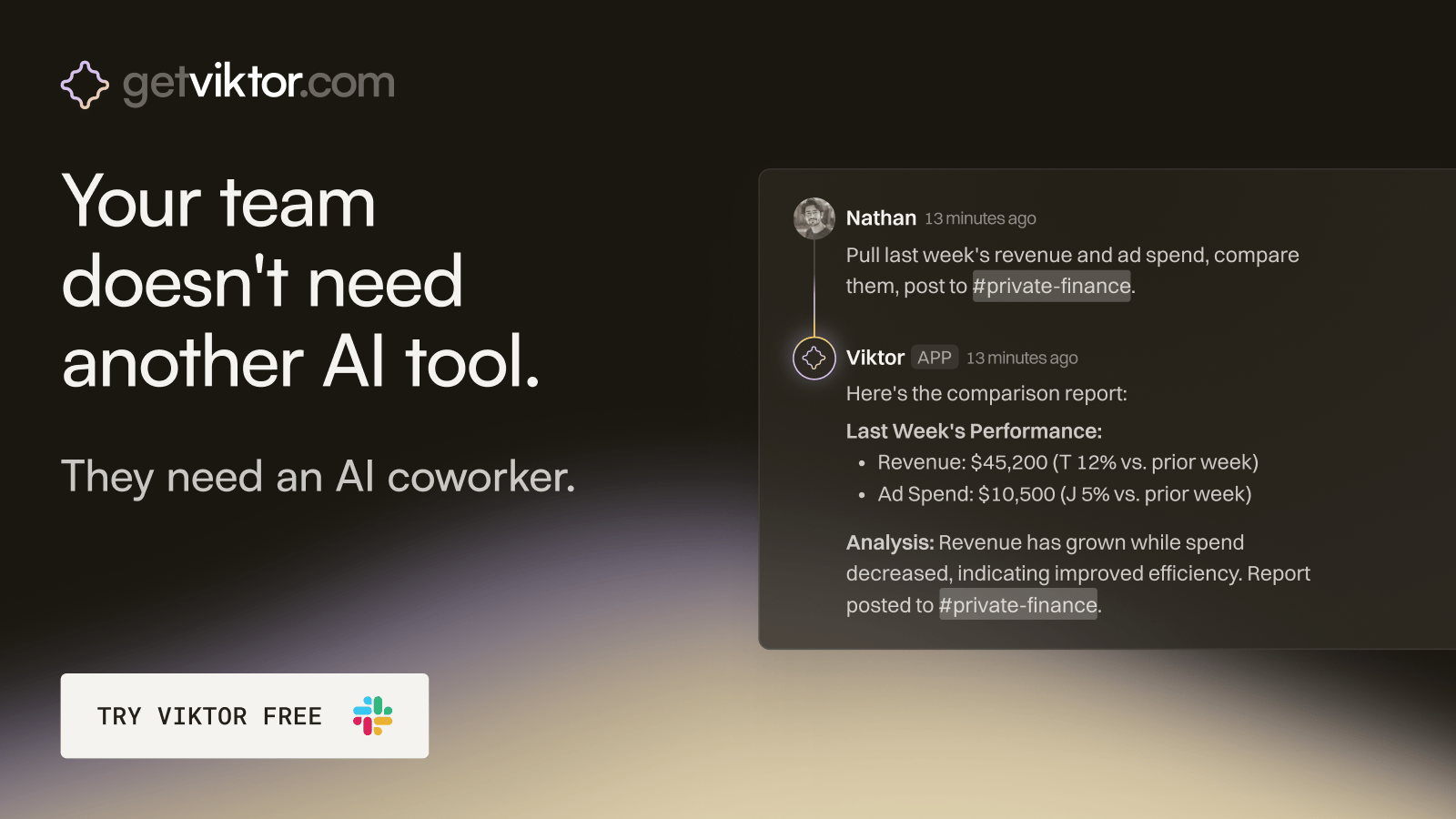
Viktor is an AI coworker that connects to your tools and ships real work. Ask Viktor to pull a report, build a client dashboard, or source 200 leads matching your ICP. Most teams hand over half their ops within a week.
Until next time!
Amplify Team ❤️
ps. Be friends with Ayesha on LinkedIn and Instagram, if you like this newsletter, share it with your friends and family here.
I'd love your feedback...Please vote below to help me improve the newsletter. |